Thursday, 6 October 2011

Revise with Highlighters

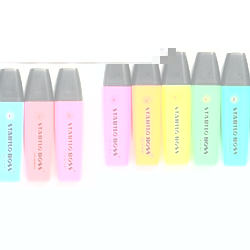
Highlighters can be your secret weapon in the war on revision. No, seriously, they are pretty damn useful for drawing attention to key words/phrases/information - I would say most people probably do this anyway. I hope so. If you want to see how effective it is, just keep reading and look how below the highlighted words jump out at you first.

But something FAR more effective is using the different categories to highlight where the information fits in.

So a couple of examples:
  • German - Highlighting masculine nouns in blue, feminine in pink, neuter in yellow.
  • History - English Civil War, Charles and Finance in yellow, Charles and Religion in Blue, Charles and Foreign Policy in Green.

Wednesday, 5 October 2011

Technique of the Week - Skeletal Notes

Skeletal Notes are extremely useful for revising large amounts of information and the great thing is, you're probably already an expert at it, without having ever done it. Skeletal Notes are basically you taking your notes or revision materials and really condensing them down to a few bullet points. Don't leave out any key information, just take out all the pointless language.

You're probably an expert at this already because human's are often by nature lazy, we try and get away with doing the least possible (it saves energy!) so when we speak, or when we write text messages to our friends, it's probably a lot shorter than if you were writing a formal letter.

It's so useful, because you can cut down the actual material you are looking at and trying to remember by over 50%! Memorizing 4 pages for an exam is a hell of a lot easier than revising 10 pages.

Let me give you an example:

"The YourLearningMentor blog is all about trying to make learning and revising easier for you so that you do better in your exams and reach your academic potential. It does this by explaining and giving examples of learning techniques such as flash cards, mindmaps and skeletal notes."

* YourLearningMentor Blog - revision skills = better in exams
* Learning techniques, e.g:
>  flash cards
> mindmaps
> skeletal notes

It's not just the fact that there are less words, it is also far clearer and when you read over the skeletal notes, you can get to the key information so quickly.
Sunday, 2 October 2011

Outstanding Teacher Biography: Michel Thomas

Michel Thomas - Language Teacher
Learning is something that I enjoy. Continuing to learn also provides me with the opportunity to try out new Learning techniques before I try them with my students.

At the moment, my goal is to reach A1 of the  CEFR level in German. According to Deutsche Welle, who are sponsored by the German government, this can be reached with about 75 hours of German study. This is a big challenge for me, as language learning was something I have not done since I studied German (hated it, dropped it as a subject) for a year at age 13.


However, with all my knowledge of how learning works and techniques that I've since gained, I'm hoping this is enough to push me through my weakness for languages. I'll share my techniques here.


First I used Michel Thomas German Foundation course. It doesn't teach too much vocabulary, but Michel makes the language really come to life and makes grammar simple. He is a wonderful tutor. For people who do not know the story of Michel Thomas, he was a decorated WWII hero who spoke many languages. Following the war, he opened a highly exclusive language school in LA, where he taught film stars. Before his death, he released audio language lessons.


Following his death, other courses were made using his method, such as Chinese. However, I don't believe these were as good. However, the courses in French, German, Italian and Spanish have the amazing man himself. If you use these, you will have an excellent foundation in the language:


Michel Thomas French

Michel Thomas German

Michel Thomas Italian

Michel Thomas Spanish


If you want to find out more about the life of life and methods of Michel Thomas, with the man himself, have a look at this YouTube video. It is from a BBC documentary where they challenged Michel to teach French to a group of young people who had little or no language experience. The results were spectacular.

Thursday, 29 September 2011

MindMap Resources

To get you stared with MindMapping now, here are a couple of things for you to have a look at.
Free Mindmap Software: Free Your Mind for Windows and MindNode for Mac
 Example MindMaps: Have a look at them, they are on useful topics we like to think about on this site).


Technique of the Week - MindMapping

A lot people think they know how to MindMap, or think it's pointless. Most of these people are wrong. Hardly any students know how to MindMap correctly, which is why they don't realise just how useful the technique can be.


Follow our 12 Step Guide to create a real MindMap and discover for yourself whether or not the real thing is useful for remembering and understanding concepts:


1. Take a blank piece of paper of A3 paper.Blank paper allows 360º of freedom to express the full range of your cortical skills, whereas pre-drawn lines restrict the natural flow of your thoughts
2. Use the paper in landscape orientationWords and images have more space in the direction we write, so they don’t bump into margins as quickly
3. Start in the centerThoughts start in the centre of our mental world. The MindMap page reflects this
4. Make a central image that represents the topic about which you are writing /thinking
  • use at least three colours
  • keep the height and width of the central image to approx. 2” or 5 cm (proportionately larger for bigger paper)
  • allow the image to create its own shape (do not use a frame)
A picture is worth a thousand words. It opens up associations, focuses the thoughts, is
fun and results in better recall:
  • colours stimulate the right cortical activity of imagination as well as capturing and holding attention
  • this size gives plenty of space for the rest of your Mind Map, while making it large enough to be the clear focus of the topic
  • the unique shape makes it more memorable and enjoyable. A frame makes the centre a monotony of shape and disconnects the branches
5. The main themes around the central image are like the chapter headings of a book
  • print this word in CAPITALS or draw an image
  • place on a line of the same length
  • the central lines are thick, curved and organic i.e. like your arm joining your body, or the branch of a tree to the trunk
  • connect directly to the central image
The main themes, connected to the central image on the main branches, allow their relative importance to be seen. These are the Basic Ordering Ideas (BOIs) and aggregate and focus the rest of the Mind Map
  • printing (versus cursive) allows the brain to photograph the image thus giving easier reading and more immediate recall
  • word length equals line length. An extra line disconnects thoughts, length accentuates the connection
  • curved lines give visual rhythm and variety and so are easier to remember, more pleasant to draw and less boring to look at. Thicker central lines show relative importance
  • Connected to the image because the brain works by association not separated, disconnected lines
7. Start to add a second level of thought. These words or images are linked to the main branch that triggered them. Remember:
  • lines connect are thinner
  • words are still printed but may be lower case
Your initial words and images stimulate associations. Attach whatever word or image is triggered. Allow the ‘random movement of your thought; you do not have to ‘finish’ one branch before moving on
  • connected lines create relationships and a structure. They also demonstrate the level of importance, as from a branch to a twig
  • the size and style of the letters provide additional data about the importance and meaning of the word/image
Add a third or fourth level of data as thoughts come to you
  • Use images as much as you can, instead of, or in addition to the words
  • Allow your thoughts to come freely, meaning you ‘jump about’ the MindMap as the links and associations occur to you
Your brain is like a multi-handed thought-ball catcher. The MindMap allows you to catch and keep whatever ‘thought ball’ is thrown by your brain
9. Add a new dimension to your MindMap. Boxes add depth around the word or imageTo make some important points stand out
10. Sometimes enclose branches of a MindMap with outlines in colour
  • enclose the shape of the branch. Hug the shape tightly
  • use different colours and styles
The outlines will create unique shapes as you find in clouds and will aid your memory
  • these provide immediate visual linking. They can also encourage follow-up and remind you of action you need to take
  • they can also show connection between branches by using the same colour outline
11. Make each MindMap a little more:
  • BEAUTIFUL
  • ARTISTIC
  • COLOURFUL
  • IMAGINATIVE
    and
  • DIMENSIONAL
Your eyes and brain will be attracted to your MindMap It will be easier to rememberIt will be more attractive to you
(and to others as well)
12. Have fun!Add a little humour, exaggeration or absurdity wherever you canYour brain will delight in getting the maximum use and enjoyment from this process and will therefore learn faster, recall more effectively and think more clearly

Hopefully, it should look something like this ^^

Tuesday, 27 September 2011

The Exam Diet

OK this is not one of those Diet's where you can lose weight or anything but it may just give you the slightest edge in your exam. Giving your brain food that will help it to concentrate in your exam may only be the difference between a couple of marks, but I've seen students lose a grade over such a thing! In fact, it's so important some colleges such as this one give out some free brain food before their exams to help students to do well!


So what are these miracle foods?! Banana, Water and Mints.


So let me explain:
  • The water keeps you hydrated and able to think properly.
  • The banana releases energy slowly over a long period of time. The are also a great source of Potassium (which has been linked to increased brain power), Vitamin B and Fiber.
  • The peppermints help clear your nasal passages. However, don't have too many or you will get too much sugar! I would advise perhaps eating the odd one whilst you study then having one during your exam too. It might sound strange, but you can associate the mint with what you are trying to remember. When you taste/smell it in the exam it could help you to re-call it. 

Check out the Top 10's

Check out the brand new Top 10 Tips in our Study SkillsRevision and Time Management sections.


Check out the brand new Top 10 Tips in our Study Skills, Revision and Time Management sections.